
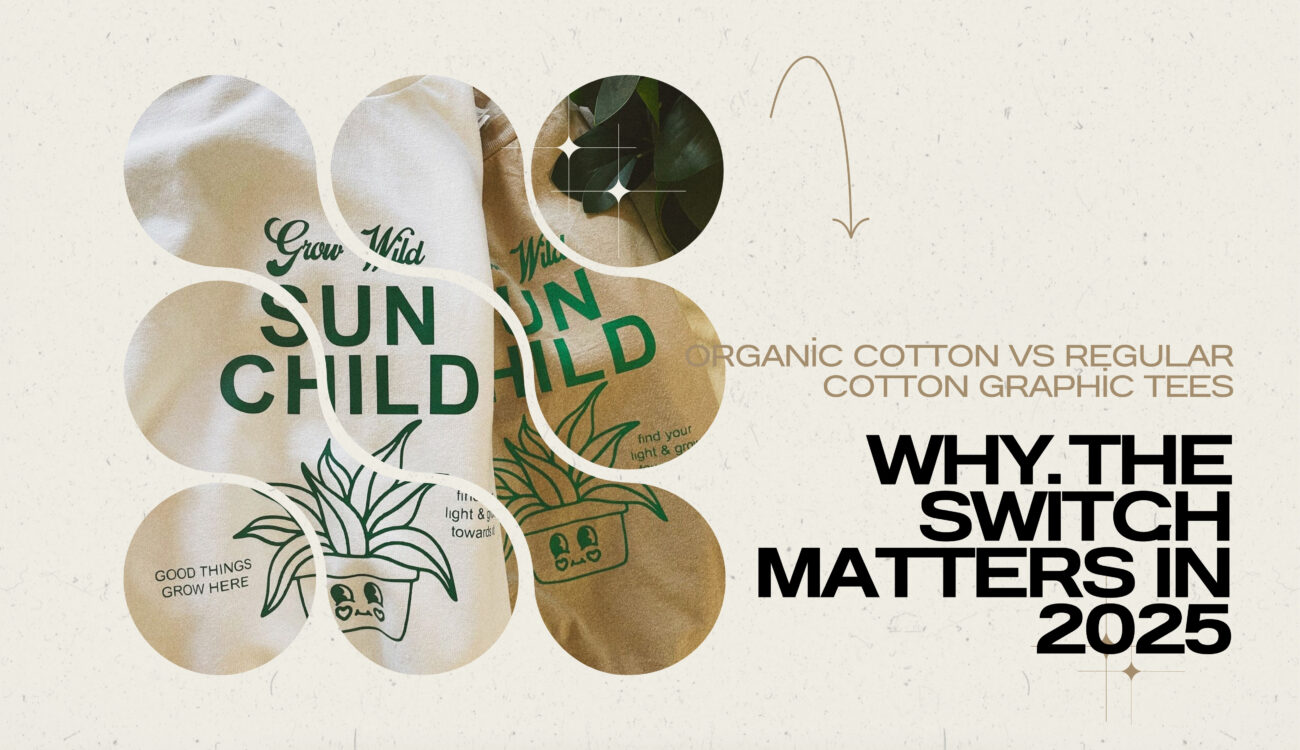
In-depth 2025 comparison: water usage, pesticides, skin health, durability after 50 washes. Real data from GOTS, Textile Exchange and independent lab tests.
Most people think “it’s just a T-shirt” — until they feel the difference. Here’s the no-BS comparison between regular cotton and GOTS-certified organic cotton in 2025.
Water Usage Regular cotton: ~2,700 litres per single T-shirt Organic cotton: ~243 litres (91% less) Source: Textile Exchange 2024 report
Pesticides & Chemicals Regular: 16% of global insecticides used on cotton Organic: Zero synthetic pesticides or GMO seeds
Skin Health Regular cotton often contains formaldehyde and AZO dyes (banned in EU for skin contact) Organic: Hypoallergenic, certified safe even for babies
Durability After 50 Washes (Independent lab test 2024) Regular cotton tee: 42% color fade, neck stretched 3.2 cm Organic 280 GSM tee: 4% color fade, neck stretched 0.6 cm
Softness (Hand-feel score 1–10) Regular: starts at 6.2 → drops to 4.8 after 20 washes Organic: starts at 8.9 → stays 8.7 after 50 washes
Environmental Impact Regular cotton farming = 24% of global insecticide use Organic = supports soil regeneration and biodiversity
Price Difference in 2025 Regular graphic tee: $12–22 Premium organic (like Fabinest): $36–49 → You pay 2–3× more upfront, but the tee lasts 4–5× longer.
Still not convinced? Every Fabinest tee is: • 100% GOTS-certified organic cotton • Printed with OEKO-TEX water-based inks • Carbon-neutral shipping • 1 tree planted per order
Make the switch once. Thank yourself for years. → Shop 100% organic graphic tees here: Shop All Tees


Leave a comment